
Quick Facts
- Award: Global Drone Operations Awards 2026, Academia & Research category
- Award winner: San Diego Zoo Wildlife Alliance
- Location: Salish Sea, Washington State, United States
- Application: Drone wildlife monitoring for marine mammal health research
- Primary population: Endangered Southern Resident killer whales
- Technology: Modified multirotor drones with custom 3D-printed sampling mounts, radiometric thermal-infrared and RGB cameras; DJI Mavic Pro used in the September 2021–2022 breath-sampling campaign
- September 2021–2022 campaign: 19 breath samples collected across 35 flights over Southern Resident and Bigg’s killer whales
Health Monitoring for Southern Resident Wild Killer Whales
Researchers needed individual health data to assess the effects of prey shortages, chemical contaminants and vessel disturbance on Southern Resident killer whales. This fish-eating population depended heavily on Chinook salmon, while vessel noise could disrupt foraging.
Conventional sampling posed practical challenges. Biopsy darts were invasive, and pole-based breath collection required close vessel approaches that could affect whale behavior. The team developed a drone-based method to collect exhaled droplets and thermal imagery remotely.
Drone Equipment for Breath Sampling
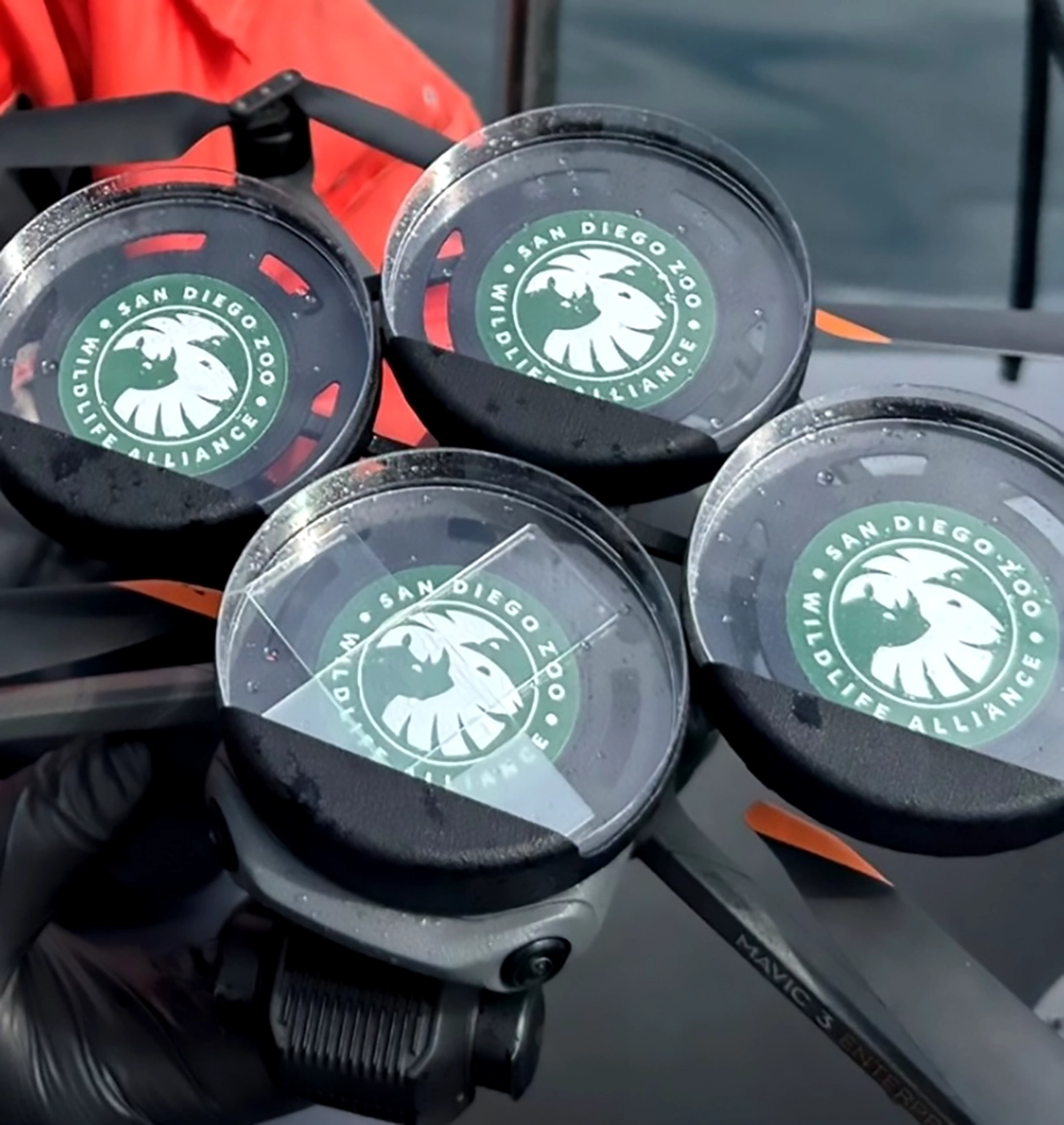
The team developed a custom 3D-printed sampling array above a modified enterprise drone. The array held four petri dishes and four slides to capture droplets from the whale’s exhaled breath. Wind-tunnel testing supported placement above the aircraft.
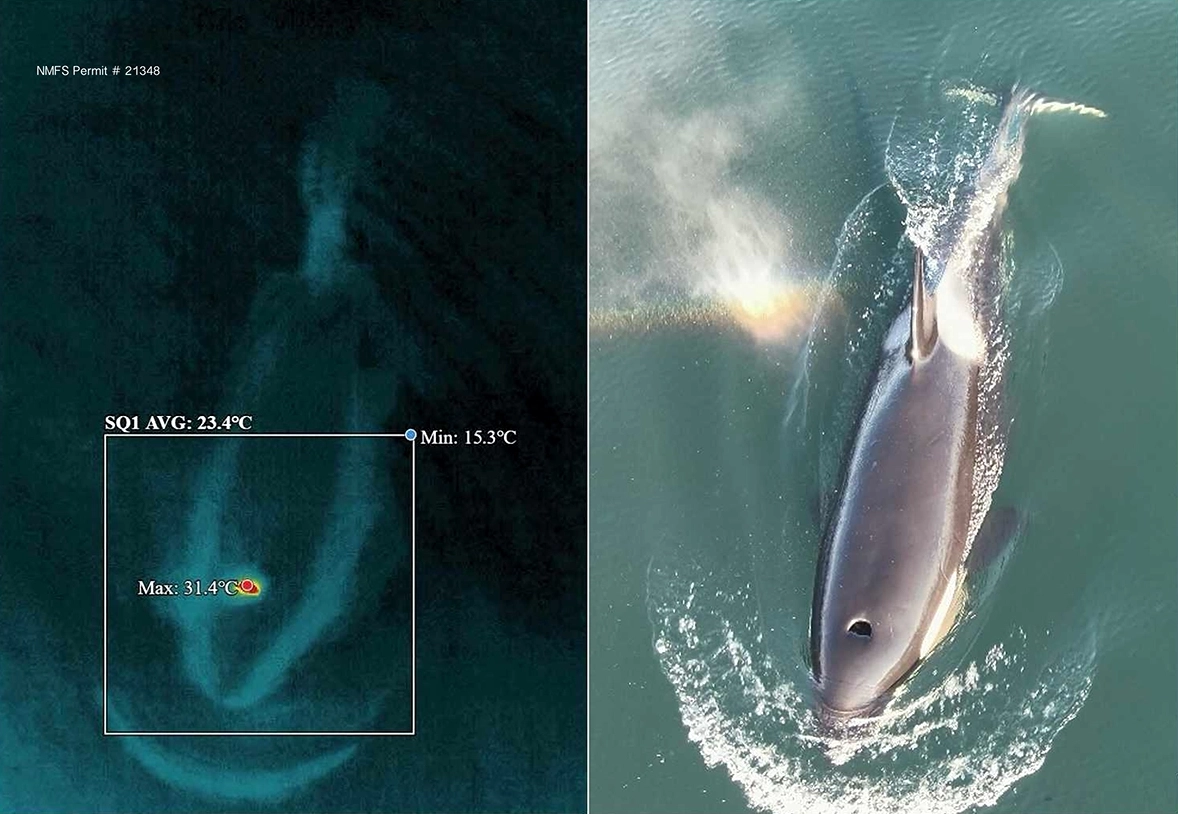
The setup also included a radiometric thermal-infrared sensor aligned with the visual camera. This allowed the team to collect breath residue and record blowhole thermal measurements during the same sampling operation. RGB footage provided context for the whale’s position and each exhalation.
Drone Fieldwork in the Salish Sea
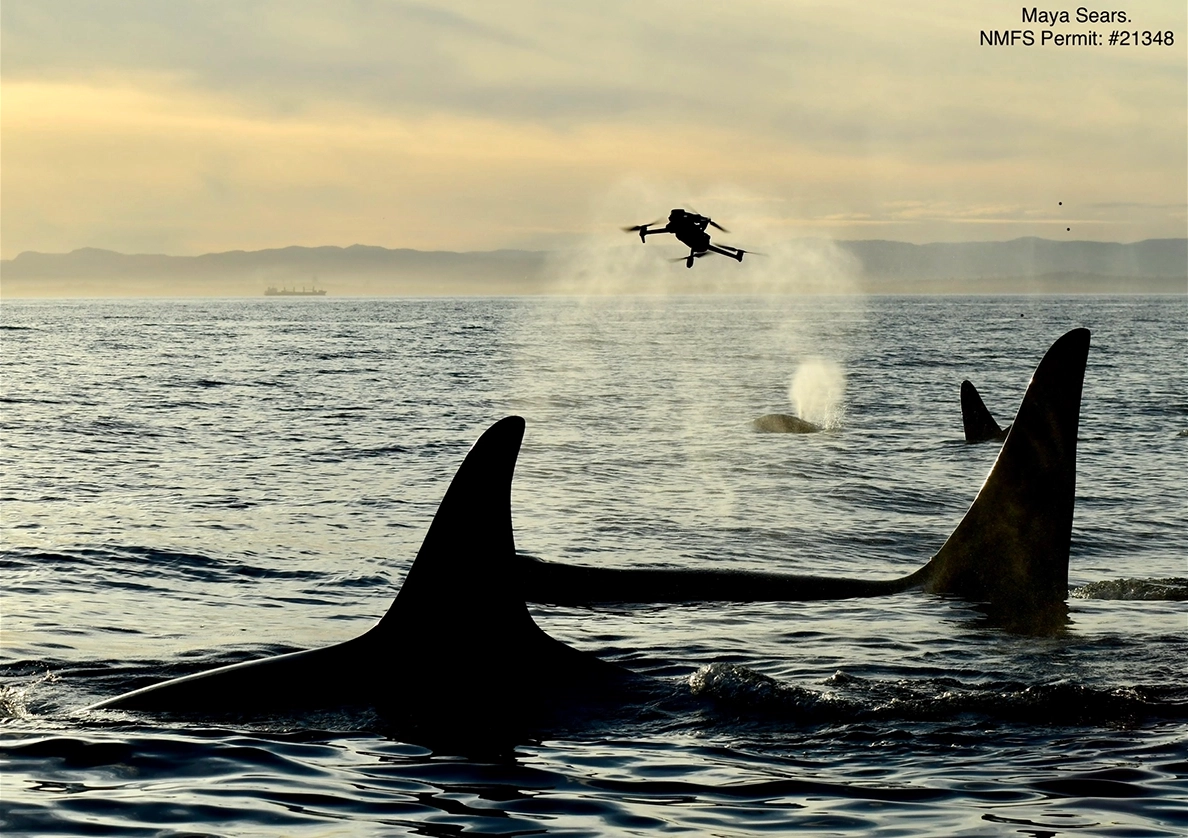
The crew deployed the drone from a research vessel and identified the focal whale from above. The pilot then positioned the aircraft behind and downwind of the whale before crossing its exhaled breath plume. The crew repeated the pass when necessary, recovered the drone promptly and checked the collection surfaces for visible droplets.
During the September 2021–2022 campaign, flights took place in daylight, without rain and at a Beaufort sea state below 3. The work operated under National Marine Fisheries Service (NMFS) permit #21348 and Institutional Animal Care and Use Committee (IACUC) approval.
Researchers recorded video from both the drone and the vessel. Biologists then reviewed the footage for visible behavioral responses to the aircraft.
Thermal Imaging and Breath Analysis
After flights, researchers extracted blowhole temperature measurements from the thermal footage and examined temperature patterns across the body surface. They matched these observations to whale identities and behavioral context.
Laboratory teams analyzed the collected breath to characterize its microbial communities, or microbiome. The laboratory workflow also included genetic identification through comparison with reference sequences. A panel of 68 known genetic markers provided a method for distinguishing individual killer whales. DNA sequencing supported analysis of the breath microbial community and screening for potential pathogens.
The team combined laboratory findings, thermal measurements and flight records into individual whale health profiles.
Researchers found that bacterial communities in breath from free-ranging killer whales differed from those in surrounding seawater. This supported the potential of breath analysis for whale health assessment. The analysis included samples collected by drones and other methods, so the findings reflected the combined dataset.
Drone Breath-Sampling Results
During the breath-sampling campaign, the team conducted flights over Southern Resident and Bigg’s killer whales and collected:
- 19 breath samples across 35 drone flights in seven days.
- Video footage that provided 1,133 observation segments for assessment of whale behavior.
Biologists identified visible behavioral responses in nine segments: six involving Southern Resident killer whales and three involving Bigg’s killer whales. These responses were rare and mild. No behavioral responses were observed during the breath-collection phase in the reviewed footage.
Drone-based collection also enabled the research vessel to remain farther from the whales than the 7.62 m (25 ft) approach that pole-based breath sampling required.
Data for Individual Whale Health Assessment
The team linked thermal observations and breath-analysis results to individual whale identities. These records provided a reference for comparisons between animals and repeated observations of the same whale.
Differences in breath microbial communities offered potential indicators for health assessment. Larger datasets and consistent collection methods remained necessary to establish normal variation and determine which differences could reliably indicate health problems.
The team planned further improvements to the drone sampling design and aimed to increase the number of whales it could identify genetically. Longer-term goals included connecting remote health assessments with veterinary intervention and using the findings to inform protection of Southern Resident killer whales, their prey and their habitat.
Award Recognition
San Diego Zoo Wildlife Alliance won the Academia & Research category at the Global Drone Operations Awards 2026 for its drone-enabled approach to non-invasive health monitoring of wild killer whales.
References
Lo et al. (2024). Behavioral responses of Bigg’s and Southern Resident killer whales (Orcinus orca) to uncrewed aerial vehicle-based breath sample collection. Marine Mammal Science.
Rhodes et al. (2026). Utilizing Exhaled Breath and Skin Microbiomes in Assessments of At-Risk Killer Whales (Orcinus orca). Marine Mammal Science.